After the Holocaust: The Story of Jewish Displaced Persons -
Public Lecture with Dr. Kierra Crago‑Schneider, United States Holocaust Memorial Museum
Join us for a special lecture with Dr. Kierra Crago‑Schneider of the United States Holocaust Memorial Museum, hosted by the Melton Center for Jewish Studies. This program, organized by Bloch Award recipient Brenna Miller, explores the complex realities facing Jewish survivors in the immediate aftermath of liberation.
Public Lecture with Dr. Kierra Crago‑Schneider, United States Holocaust Memorial Museum
Join us for a special lecture with Dr. Kierra Crago‑Schneider of the United States Holocaust Memorial Museum, hosted by the Melton Center for Jewish Studies. This program, organized by Bloch Award recipient Brenna Miller, explores the complex realities facing Jewish survivors in the immediate aftermath of liberation.
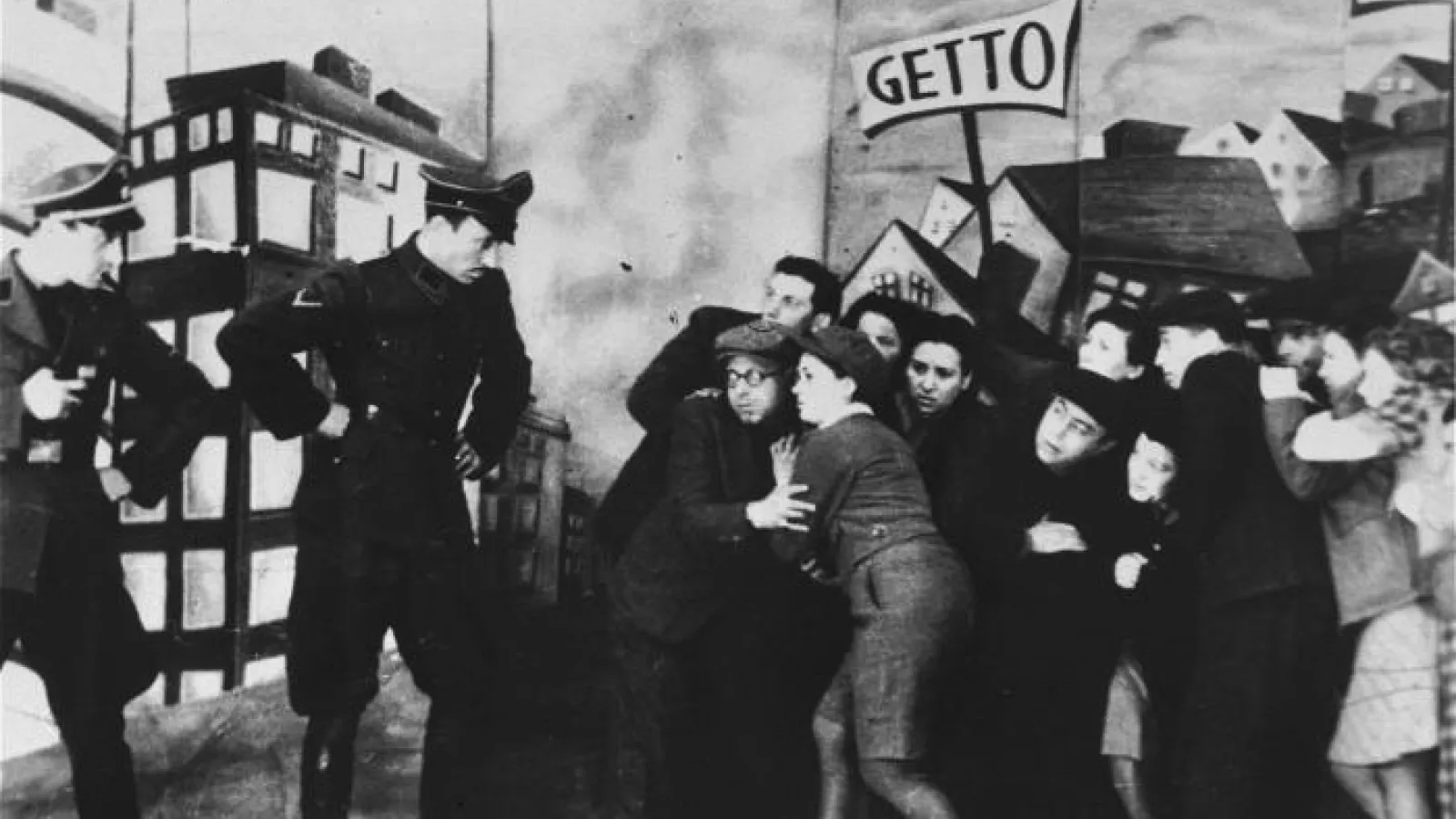
Jewish liberation did not bring the joy, rebirth of Jewish life, or freedom anticipated by Holocaust survivors, international aid organizations, and the Allies. Postwar antisemitism, fear of retaliatory action against Germans, and a long-term stay in Allied run Jews-only centers in Germany meant true freedom would only come with their resettlement abroad. Until then, these Jews were forced to imagine a reality where they were able to dictate daily life without the constraints of the camp system, external support, and choose their own futures. However, theater, music, and other forms of art created by Jewish displaced persons (DPs) after World War II functioned not only as cultural expression but as a means of reclaiming identity, processing trauma, and shaping how survivors were represented to both themselves and the wider world.
This presentation will look at the period from liberation in 1945 to 1948 when immigration opportunities become available for most survivors. It will introduce postwar Jewish life in camps in West Germany, how survivors understood their Holocaust experiences, and their continued stay in the land of the oppressor. This lecture enhances awareness of both postwar Jewish history and culture by demonstrating how Jewish Holocaust survivors depicted what had happened to them through artistic and cultural means and how that shaped the views of postwar Jewish DPs.
Dr. Crago-Schneider’s research focuses on the relationships formed between Holocaust survivors living in Jews-only Displaced Persons’ centers in Germany, American occupiers, international aid workers, and Germans from 1945-1957. Her research and writing examine the conditions, interactions, and continued antisemitism faced by Jewish survivors in the wake of their liberation. Her publications include “The Most Tragic of All Survivors? Elderly Displaced Persons in US-Occupied Germany,” in Older Jews and the Holocaust, edited by Betsy Anthony, Christine Schmidt, and Joanna Sliwa, Wayne State University Press, forthcoming 2026, “Years of Survival: JDC in Post-War Germany, 1945-1957,” co-authored with Avinoam Patt, in, The Joint Distribution Committee: 100 Years of Jewish History, edited by Atina Grossmann, Linda Levi, Maud Mandel, and Avinoam Patt, Wayne State University Press, 2019, “A Community of Will: The Resettlement of the Orthodox from Föhrenwald,” Holocaust and Genocide Studies 32, no 1 (Spring 2018), Jewish “Shtetls” in Postwar Germany: An Analysis of Interactions Among Jewish Displaced Persons, Germans, and Americans Between 1945 and 1957 in Bavaria, Proquest, June 2013, and “Antisemitism or Competing Interests? An Examination of German and American Perceptions of Jewish Displaced Persons Active on the Black Market in Munich’s Möhlstraße,” Spring 2010, Yad Vashem Studies, v1, 38 pages (167-194).
Dr. Crago-Schneider is the Campus Outreach program officer. Her current position cultivates interdisciplinary approaches to the Holocaust that are relevant to unique geographical regions in the United States and Canada. Active engagement and exploration, focusing on shared history in North America and Europe during the 1920s, 1930s, and 1940s, enlivens Holocaust studies and other related fields. Dr. Crago-Schneider works with college and university communities to develop and facilitate rigorous, nuanced conversations around important historical questions, ensuring that Holocaust studies remains at the center of campus and curricular discussions.
Dr. Crago-Schneider worked as a historian for the Conference on Jewish Material Claims Against Germany from 2013–15 and as a lecturer at the University of Maryland, Baltimore County from 2016 to the present and UC Davis from 2012–13. Before this, she was a Claims Conference Saul Kagan Fellow in Advanced Shoah Studies and a UCLA Mellon Fellow on the Holocaust in American and World Culture
Performance of “This is how it Began,” 1947, Bergen-Belsen, US Holocaust Memorial Museum, Courtesy of Gedenstått Bergen-Belsen
Jewish liberation did not bring the joy, rebirth of Jewish life, or freedom anticipated by Holocaust survivors, international aid organizations, and the Allies. Postwar antisemitism, fear of retaliatory action against Germans, and a long-term stay in Allied run Jews-only centers in Germany meant true freedom would only come with their resettlement abroad. Until then, these Jews were forced to imagine a reality where they were able to dictate daily life without the constraints of the camp system, external support, and choose their own futures. However, theater, music, and other forms of art created by Jewish displaced persons (DPs) after World War II functioned not only as cultural expression but as a means of reclaiming identity, processing trauma, and shaping how survivors were represented to both themselves and the wider world. This presentation will look at the period from liberation in 1945 to 1948 when immigration opportunities become available for most survivors. It will introduce postwar Jewish life in camps in West Germany, how survivors understood their Holocaust experiences, and their continued stay in the land of the oppressor.
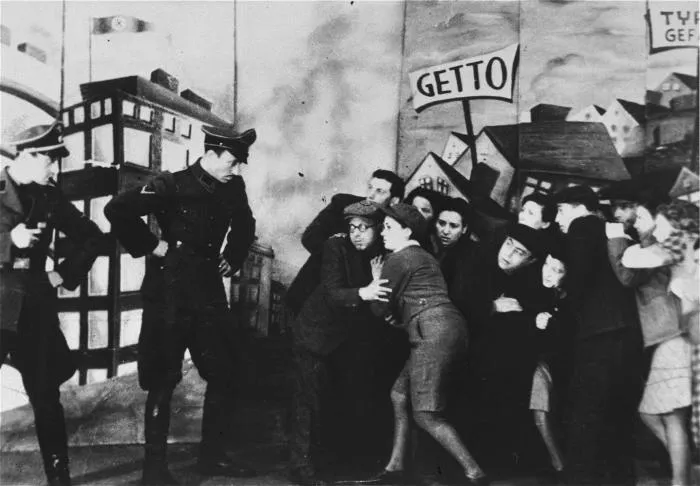
Performance of “This is how it Began,” 1947, Bergen-Belsen, US Holocaust Memorial Museum, Courtesy of Gedenstått Bergen-Belsen
Sponsored by the 2026 Norbert and Gretel B. Bloch Endowed Scholarship in Jewish Studies
This event is free and open to the public.